The Legendary Canadian Moose
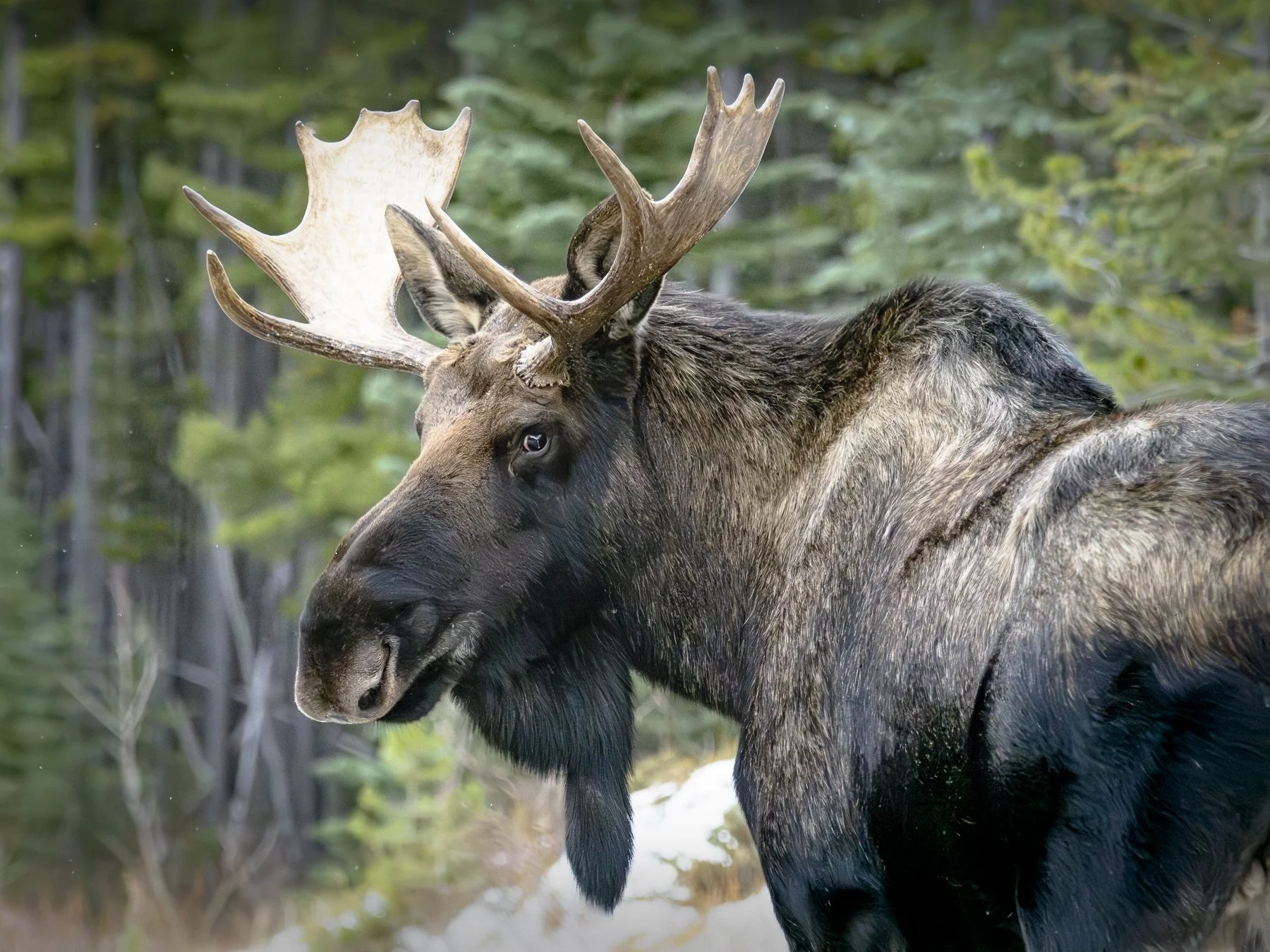
Bull moose, Northern Alberta, Jasper National Park
The Canadian moose is one of the most iconic and impressive wildlife species in North America, especially abundant in Northern Alberta and Jasper National Park.
I have been fortunate to live in exceptional moose habitat throughout my life, including wetlands, lakeshores, marshes, and forest edges. Moose frequently visited the lake behind our house, which is filled with diverse aquatic plants and shrubs year-round.
I remember a close call we had with a cow moose and her calf one spring evening. As a family, we often enjoy a cozy evening by the outdoor fire, sharing stories and taking in the beauty of nature. When I heard a newborn calf moose calling as if it were in distress, it seemed odd because you rarely hear a moose call at this time of year. It happened to be a full moon, so I went down to the lake to see if I could spot anything unusual.
To my surprise, I saw a lone calf moose swimming across the lake toward us. Even at a young age, moose are excellent swimmers and can easily cross lakes and rivers. But it was quite strange to see a single calf out in the middle of the lake without its mother. My first thought was to figure out where Mom was.
Sure enough, I could hear a cow moose call from the far bank. A cow moose call is one of those sounds that’s hard to forget once you hear it — it’s eerie, drawn out, and surprisingly human-like.“Muuuuuuuhhh… waaaahhh…” Some people describe a cow moose call as ghostly or haunting in the forest. In this case, she was letting her calf know where she was.
Since a full-grown moose is dark brown to nearly black, calves tend to be lighter. It was just dark enough that I couldn’t see her exact location. But what I did know was that our campfire could very well be directly in the middle of her shoreline trail to meet up with her calf.
I ran up to warn everyone that I suspected Momma Moose was about to charge right over us to reunite with her calf. I do remember everyone laughing at me for having such a crazy thought.
Then, I heard a deafening sound of trees and shrubs snapping in the distance, like a D-10 cat coming right at us. I yelled, “Here she comes!” A moose has long legs, allowing it to wade into deep water to reach aquatic plants. These long legs also give it good clearance in deep snow and along the lake shorelines. Despite their size, they can run up to 35 mph (56 km/h) on land.
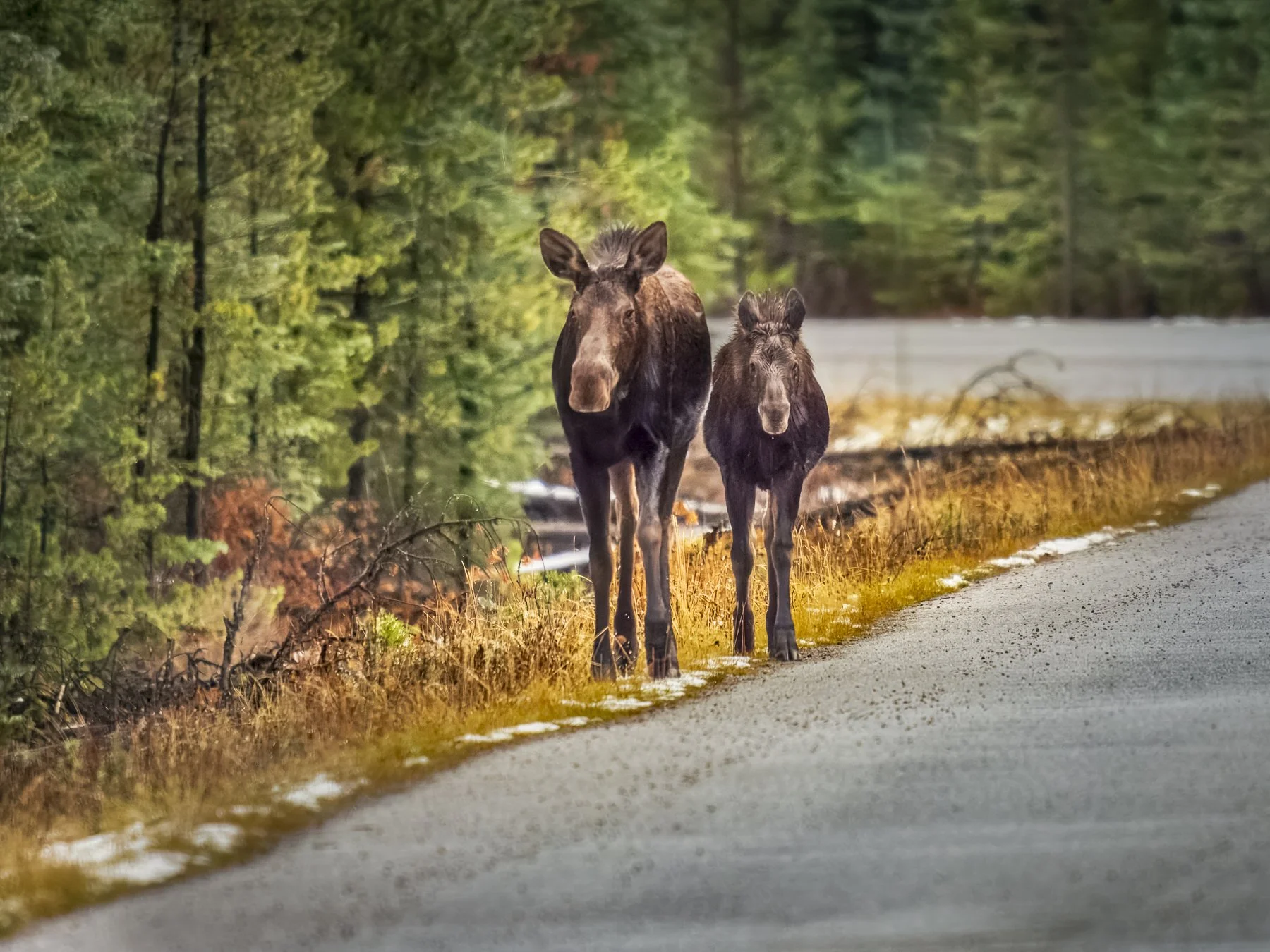
Cow Moose & Calf, Jasper National Park
Males (bulls) can weigh between 1,400 and 1,600 lbs (635–725 kg), standing nearly 6.5 ft (just under 2 m) at the shoulder. Females (cows) usually weigh from 800 to 1,200 lbs (360–545 kg). A moose has a broad, sensitive nose that helps them sniff out predators and find food. They are not sharp-eyed hunters— their vision is adapted to detect movement rather than fine detail. Stationary objects, camouflage, or those blending into dark forests may be difficult for them to see up close.
Even though a moose has a tapetum lucidum (a reflective layer in the eye), it helps them see in low light. Because it was dark, this moose was probably relying on its ears, nose, and night vision over the lake to find its calf. Our presence and chairs were likely not even on her mind. Plus, she was in full protective mode over her young. We were in her way.
As it all unfolded, we scattered from our chairs like snowflakes in a blizzard. This cow moose came thundering past us, within 5-8 yards of where we used to sit. She did get together with her calf, and they swam across the lake into the moonlight to get as far away from us as possible.
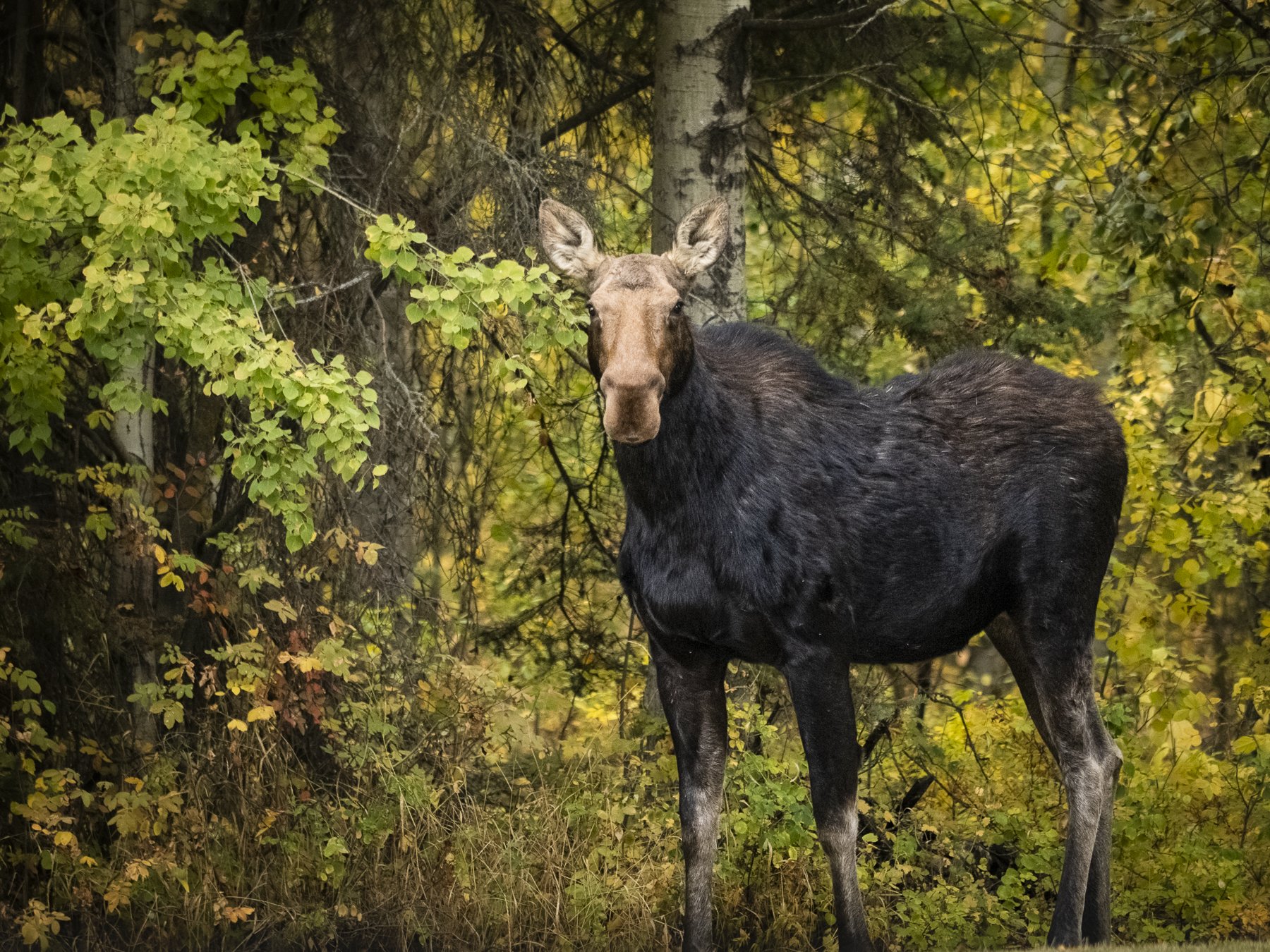
Notice how this magnificent northern Alberta cow moose relies on her sharp hearing, large ears, and keen sense of smell with her broad, sensitive nose as I take this close-range photo.
Only males have antlers; they can span up to 6 feet across. Antlers are shed each winter. They grow a new, larger set every year to display their dominance during mating season. If you look closely into this bull’s eyes, you might notice the tapetum lucidum (reflective layer in the eye).
This moose, though large, sauntered away to let the much larger moose enter his territory.
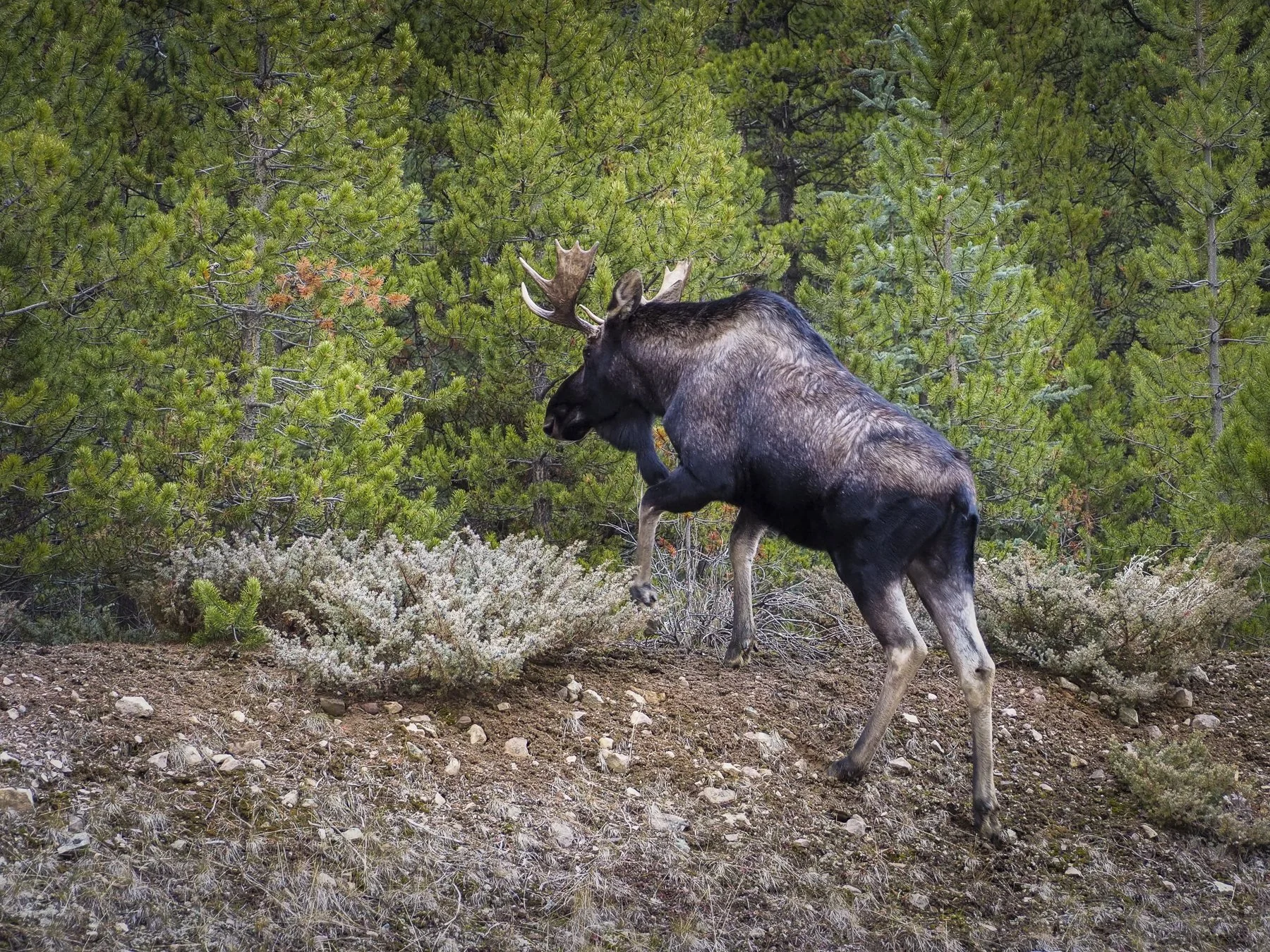
Bull Moose senses a larger bull moving in. Notice his long legs and the ease with which he climbs straight up a steep hill.
The big guy arrives, adapted for survival. This is one of my favourite images. Notice how even his horns are impressive. This moose was probably in its prime, taken late in the rut with no challengers, showcasing its dominant traits.
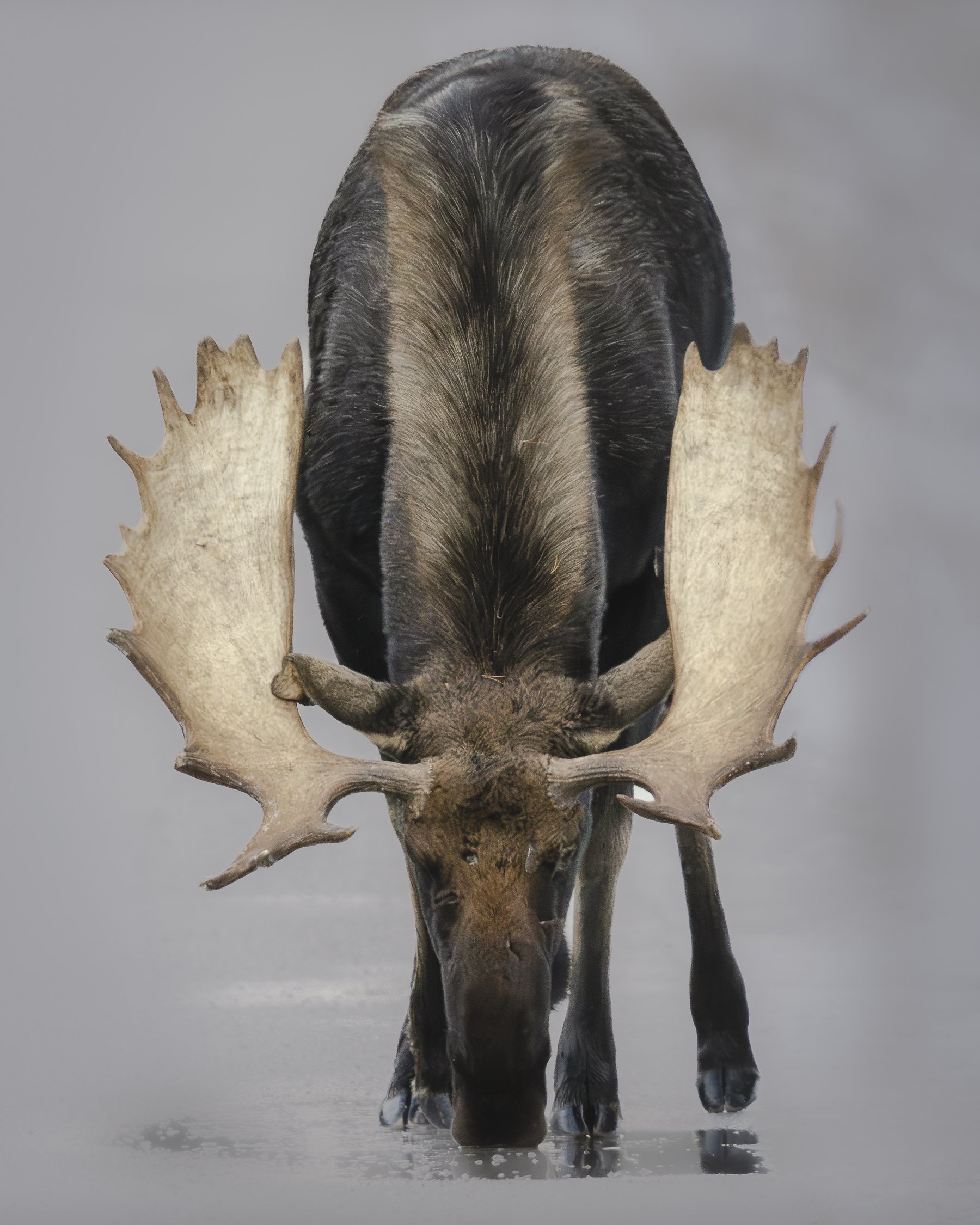
An impressive bull moose claims his territory as other bulls keep their distance from a cow in heat. Late fall.
Noteworthy Fact: More moose are killed by trains and vehicles each year because their main line of defence is to stand tall and hold their ground—right in the middle of a road or train track.
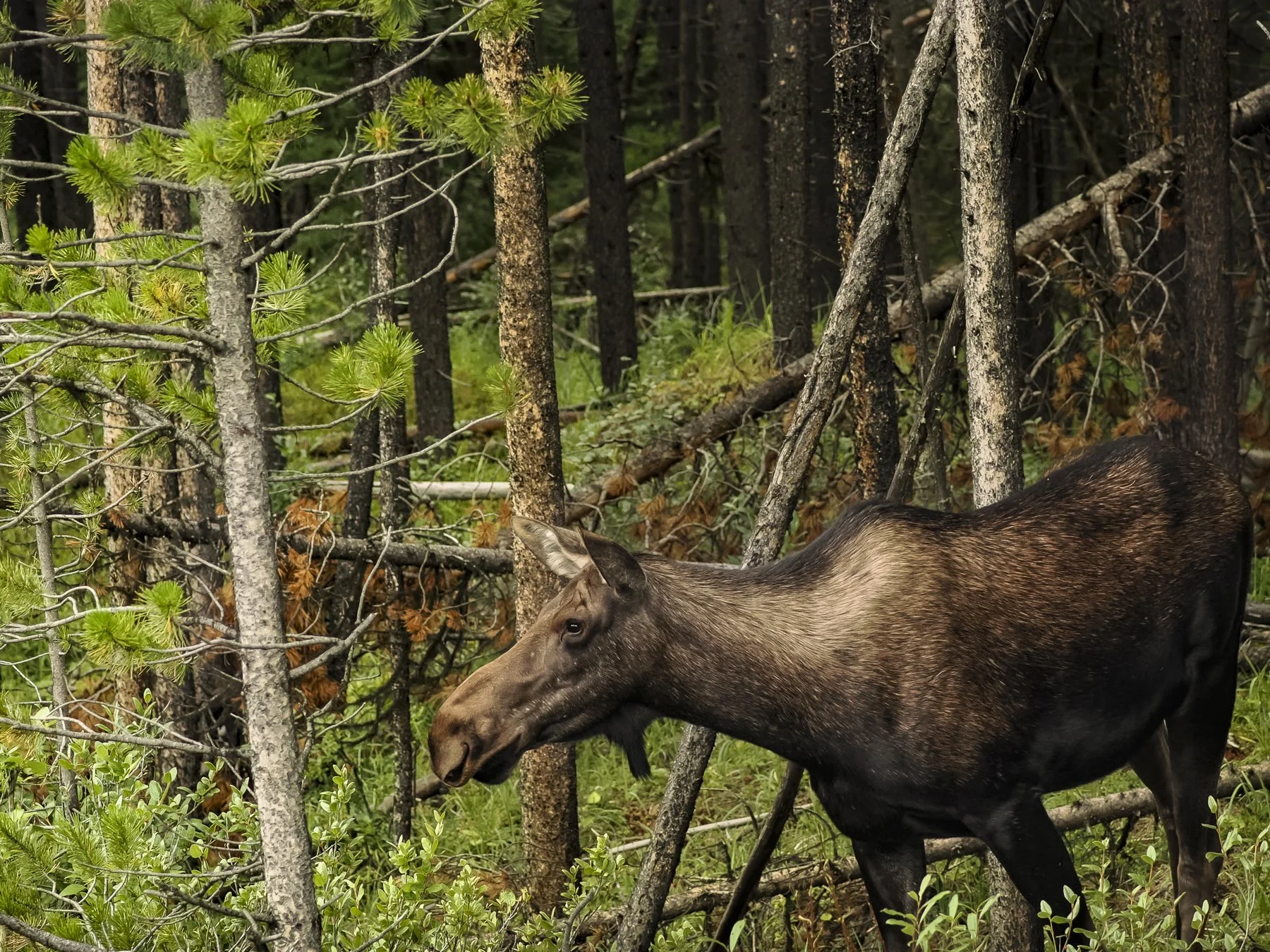
Locals often call Moose swamp donkeys because they enjoy heavily wooded areas and swampy terrain, and if you look closely, they share features with a donkey.